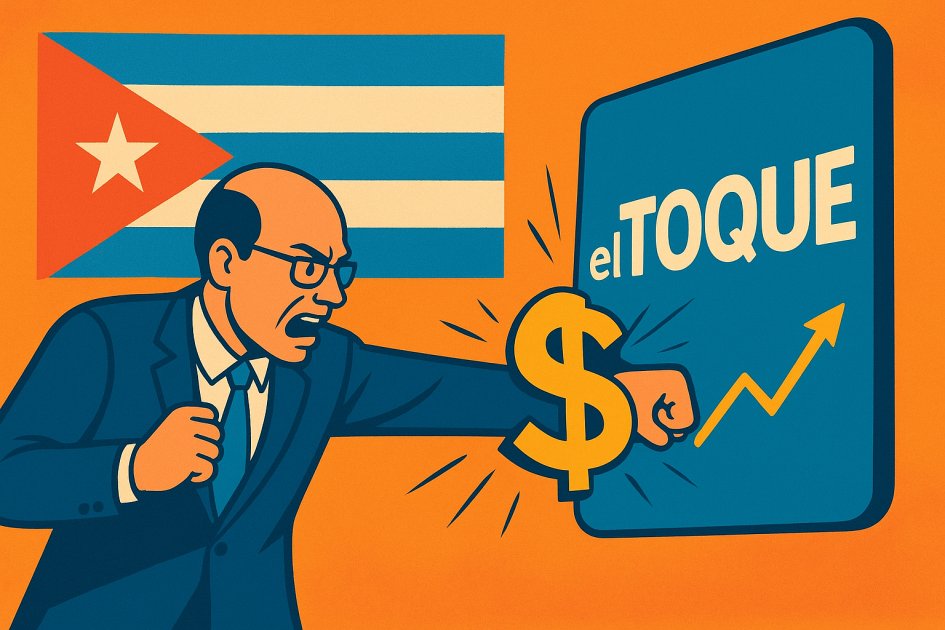
💰 Replacement only from abroad
According to testimonies collected by digital media, ETECSA currently does not have SIM cards available for sale within the country in national currency.
The only option their offices offer is to purchase the eSIM from abroad through authorized platforms such as Suena Cuba, whose prices are set in US dollars or euros.
This means that a person in Cuba, even if they lose or have their phone stolen, cannot recover their mobile number without help from abroad.
The cost of an eSIM—about 45 USD, equivalent to more than 17,000 CUP at the informal exchange rate—represents almost two months of average salary on the island.
📵 A digital disconnection with an economic face
Paradoxically, while ETECSA promotes Cuba's "digital advancement" and the transition to services such as eSIM, its commercial policy reinforces technological and financial inequality.
Those who depend on the state salary in national currency are left out of access to basic services such as mobile communication, an essential tool in modern life.
To this is added the opacity in inventory management and the lack of official explanations about why SIM cards are not offered in CUP, not even for replacements of active lines.
🌍 Structural dependence and foreign currency as the only way out
This model confirms a widespread trend: the silent dollarization of essential services in Cuba.
Just as with the sale of fuel, food or appliances, connectivity now also depends on foreign currency.
Cubans who do not have relatives outside the country are completely disconnected, literally and economically.
🚀 An alternative for Cubans inside and outside the island
While ETECSA restricts its services to payment in foreign currency, Billetaxo offers accessible and secure solutions from the Dominican Republic and other Caribbean countries.
Through its platform Billetaxo.com, users can:
- Send mobile and data top-ups to Cuba instantly.
- Pay from the Dominican Republic, with local methods and without intermediaries.
- Access digital products (such as international eSIMs) without depending on the state monopoly.
🧭 Conclusion: digitalization without inclusion
ETECSA's decision to limit eSIM replacement to the foreign currency market not only affects users, but also accentuates the country's digital and economic gap.
A true technological transformation must be inclusive and affordable.
Otherwise, "digitalization" will continue to be a luxury in a nation where communication already costs in dollars.
![[EN: Mejores Apps para Recargar Cuba en 2025: Guía Comparativa Completa]](/blog/previews/mejores-apps-recargar-cuba-2025.webp)