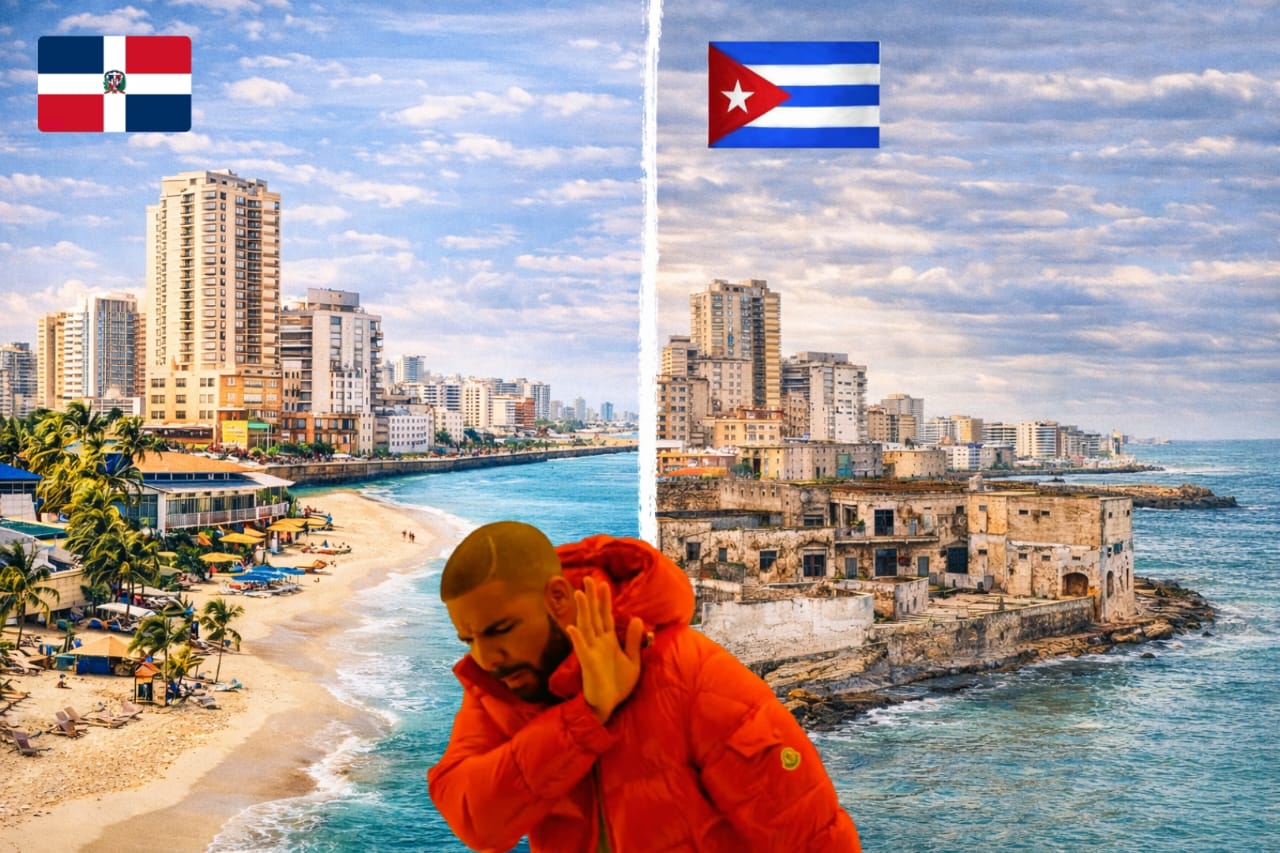
Latin America (2015–2026): Who Earns More from Tourism… and Who Depends More on Tourism
When talking about "tourism powers" in Latin America, we usually think about who collects more dollars from international tourism. But that's only half the story.
The other half is more uncomfortable (and more important for the economy): what percentage of GDP depends on those tourism revenues?
Between 2015 and 2026, the region experienced three clear acts:
Sustained Growth (2015–2019)
COVID-19 Collapse (2020)
Recovery and New Highs (2023–2026), with global tourism practically back to pre-pandemic levels in 2024. Untourism
The Regional Pattern: The Pandemic Didn't "Change" Tourism… It Accelerated It
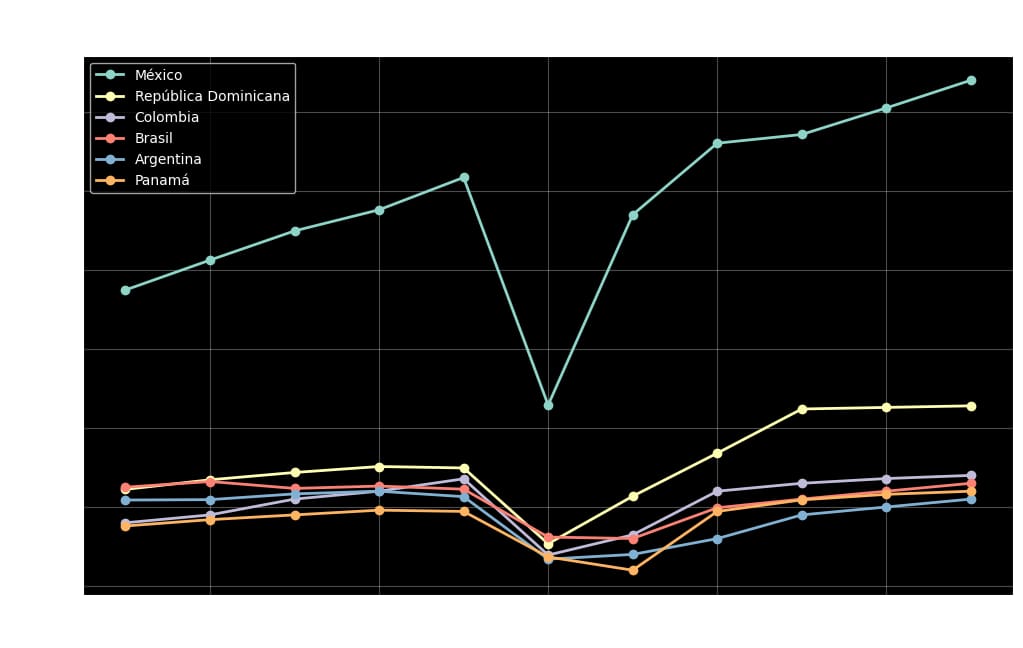
In 2020, almost all countries saw their tourism revenues drop sharply. What's interesting is what happened afterward: recovery was not uniform. Dollar leaders grew again, and the most dependent countries felt the blow much more strongly… because when tourism falls, a large part of their economy falls.
The 6 Big Players by Tourism Revenues (and What It Really Means)
The data summarizes the recurring ranking by international tourism revenues (2015–2026) with these protagonists:
- Mexico (absolute leader in dollars)
- Dominican Republic (high revenue and high dependence)
- Colombia (strong emerging)
- Brazil (large in dollars, small in % of GDP)
- Argentina (volatile due to macro)
- Panama (high relative weight in its economy)
The key is that they don't compete under the same "economic rule".
Mexico: The King in Dollars… But Doesn't Live Off Tourism
Mexico dominates by volume: it is the largest recipient of international tourism revenues in the region. Reports from the SECTUR ecosystem itself indicate that in 2024 foreign exchange income from international visitors was around US$33 billion. Ladevi
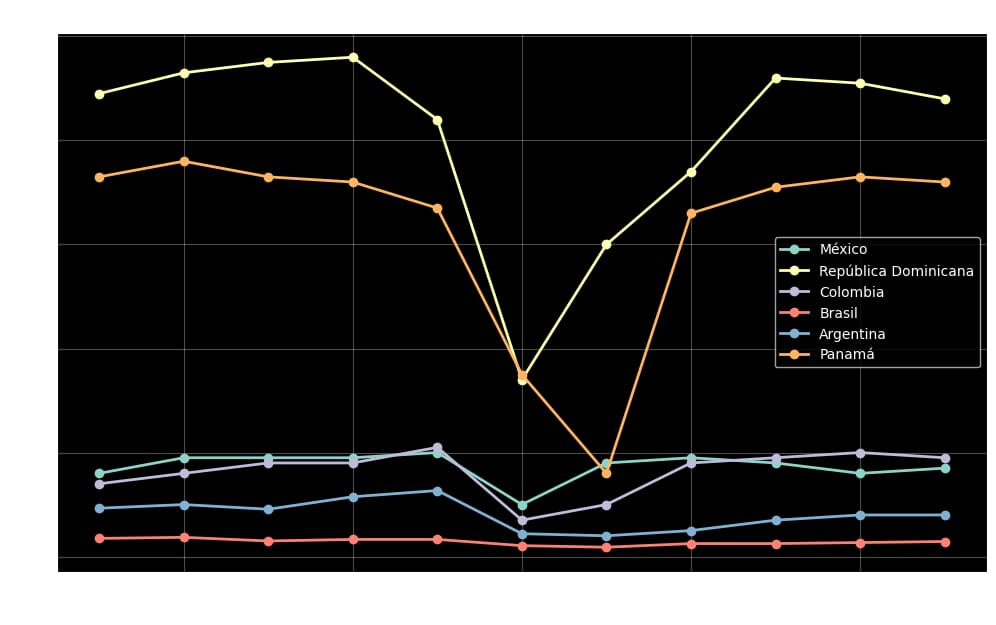
But, given the size of its economy, that amount usually represents a relatively low portion of GDP (around 1–2% in normal years, according to GDP in current USD). World Bank Open Data
Economic Translation: Mexico can lead in tourism and still maintain a diversified economy. Tourism adds, but doesn't decide everything.
Dominican Republic: Fewer Dollars Than Mexico, More Strategic Dependence
Here is the most interesting point for the Caribbean: DR doesn't earn more than Mexico in absolute terms, but tourism weighs much more in its economy.
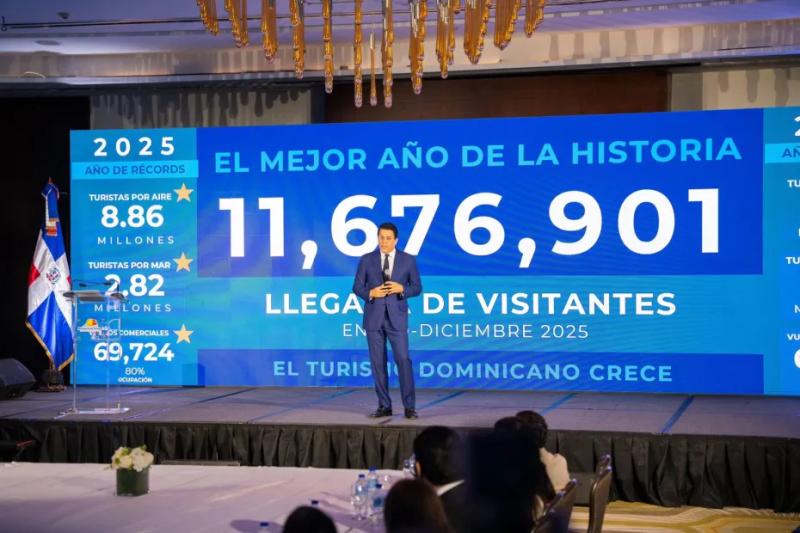
The Central Bank reported that in 2024 tourism revenues totaled ~US$10,974 million. Central Bank of the Dominican Republic
And WTTC estimates that in 2024 the travel and tourism sector contributed US$20.5 billion to GDP, equivalent to 16.1% of the national economy, in addition to projecting US$11.4 billion in international tourism spending for 2025. wttc.org
Economic Translation: DR is a case where tourism is not "just another sector", but a backbone. If it rises, it pushes everything; if it falls, it hurts in a chain.
Panama: The "Hub" That Converts Few Visitors into Lots of Money
Panama is not always perceived as a tourism power, but its figures (by economic size) are very serious:
UN Tourism highlights that in 2023 Panama generated US$5.432 billion in tourism revenues, a +20% vs 2019. Untourism
Economic Translation: Panama monetizes tourism with a high spending profile (connectivity, business, short but expensive stays, air hub), and that's why tourism has an important relative weight.
Colombia: Real Growth, But with Moderate Dependence
Colombia appears as a "growth story" post-2015 and consolidation in 2019. The OECD shows that tourism was a relevant contributor to the economy and that the pandemic shock reduced its weight, with subsequent recovery. OECD
In addition, data aligned with World Bank series place tourism revenues at US$6.784 billion (2019) and US$1.959 billion (2020), reflecting the blow and the comparison base for the rebound. CEIC Data
Economic Translation: Colombia grows in tourism, but its economy does not depend mainly on that (unlike the insular Caribbean).
Brazil and Argentina: Large in Size, Small in Proportion (and Argentina with High Volatility)
Brazil: may rank among the first by absolute size, but international tourism is usually small compared to its GDP (huge economy, strong domestic tourism).
Argentina: tourism exists, but its measurement in USD and its evolution depend heavily on macro (exchange rate, inflation, controls, cycles).
Economic Translation: being "at the top" of the dollar ranking does not imply dependence; often it simply implies country size.
Conclusion: Leading Is Not the Same… As Depending
The evidence summarizes a key lesson for public policy, investment, and country strategy:
- Mexico leads in dollars → tourism power with diversified economy.
- Dominican Republic and Panama → fewer dollars than Mexico, but much more tourism/GDP.
- Colombia → strong growth with contained dependence.
- Brazil/Argentina → relevant tourism, but subordinated to size/macro volatility.
The pandemic was the stress test. And from 2023–2026, regional tourism enters a phase where growth returns… but with a more important question than the ranking:
How much of your economy falls if tourism stops?