For decades, the Cuban regime has presented tourism as the great "locomotive" of the economy. But according to Cuban economist Omar Everleny, today that locomotive is "rusted and without cars": it does not pull the rest of the sectors, does not generate the expected productive linkages, and operates with occupancy levels so low that they make the current model unviable.
In his analysis, Everleny puts forward a central idea:
without truly integrating the private sector and MSMEs, tourism in Cuba will not recover.
Based on his arguments and the most recent figures, this article reviews the situation of tourism in Cuba and the keys to the reform that the economist proposes.
1. Hotel occupancy that reveals the crisis
One of the most compelling data points is hotel occupancy:
In August 2025, occupancy was only 21%.
That is, out of every 100 rooms, only 21 were occupied.
In 2022, average occupancy was even lower: 15.6%, according to data from the National Office of Statistics and Information (ONEI).
With these levels:
- Hotels' fixed costs are not covered.
- The sector's profitability plummets.
- Any investment in new rooms becomes difficult to justify, because the problem is not a lack of beds, but a lack of demand and an attractive model.
2. Drop in visitors and misdirected investments
The crisis is not only about occupancy; it is also about tourist volume and efficient use of investment.
Evolution of tourist arrivals
- 2018: more than 4 million tourists, with 2.728 million CUC in revenue.
- 2020: barely 1.08 million tourists, hit by the pandemic.
- 2021: the figure plummeted to about 356,000 visitors.
- Projection for 2025: around 2 million tourists, still far from 2018 levels.
Misaligned investment
Despite the decline:
- In 2020, tourism absorbed 47% of the country's total investment.
However:
- Occupancy rates remain at rock bottom.
- Infrastructure is far from competitive.
For Everleny, this shows a deep disconnect between:
- What the government invests in hotels and tourism infrastructure, and
- What the market actually demands.
3. Structural problems: from "all-inclusive" to everything disconnected
Everleny identifies several underlying problems in the Cuban tourism model:
a) Lack of productive linkages
Tourism should pull other sectors, but in Cuba:
- Hotels do not systematically source from national producers.
- Agriculture, food industry, and cultural industries do not take advantage of visitor flows as they should.
Much of the value is lost in:
- Costly imports.
- Inefficient state structures.
- Lack of incentives for local producers.
b) Unsustainable "all-inclusive" model
The all-inclusive scheme, very popular in Cuba, has several negative effects:
- It keeps tourist spending within the hotel:
- Less consumption in private restaurants.
- Fewer visits to local businesses.
- Less money circulating in the community.
- It generates resource waste and an environmental and economic impact that is difficult to sustain with low occupancy.
- It is increasingly less attractive to many international tourists, who seek:
- Authentic experiences.
- Contact with local culture.
- Diverse and non-standardized gastronomy.
c) Deficient basic infrastructure
The tourist experience is hampered by:
- Frequent power outages.
- Problems with water supply.
- Irregular quality of public services.
Without stable basic infrastructure:
- It is very difficult to compete with other Caribbean destinations.
- Tourists leave with a negative perception that damages the country's reputation.
d) Brain drain and poor service
The combination of:
- Massive emigration,
- Low wages, and
- Lack of incentives,
has generated:
- Shortage of trained personnel in hotels and tourism services.
- Frequent complaints about poor service, lack of professionalism, and demotivated staff.
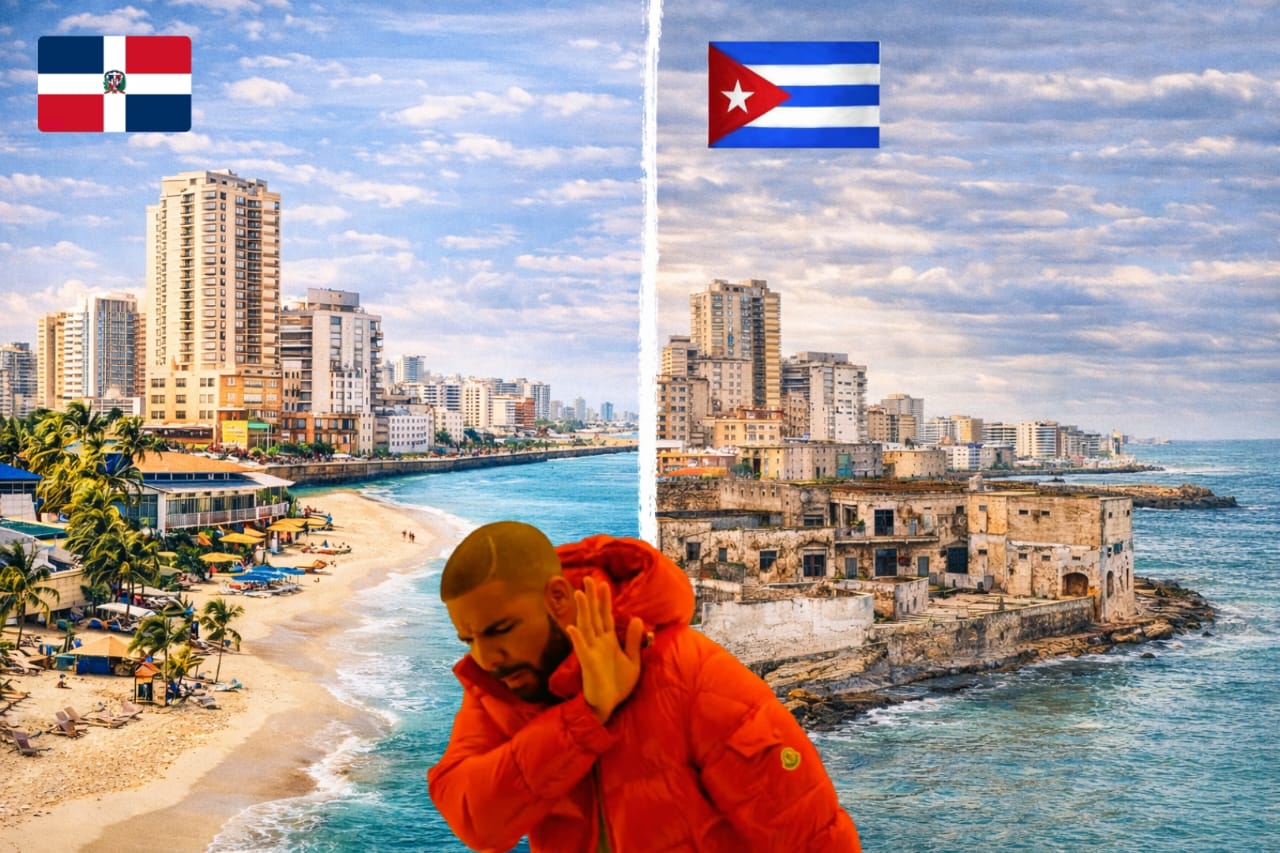
All this causes Cuba to lose competitiveness compared to destinations such as the Dominican Republic, Mexico, or other Caribbean countries, where service is a differentiating factor.
4. Seasonality: a problem, but not the root
Like many sun and beach destinations, Cuba suffers from strong seasonality:
High season:
- November to March (European winter).
- Also peaks in July and August, due to tourism from emigrated Cubans.
Low season:
- May and June.
- Especially September and October, due to:
- High temperatures.
- Rains and impact of the cyclone season.
Seasonality is normal in the Caribbean, but in the Cuban case:
- It combines with structural problems (management model, lack of linkages, poor infrastructure).
- It aggravates low occupancy and investment inefficiency.
5. The role of the private sector and MSMEs: the missing piece
For Everleny, one cannot speak of healthy tourism without real private sector participation. His proposals go in three directions:
a) Productive linkages with MSMEs
Hotels should buy food and services from:
- Small and medium-sized local businesses.
- Agricultural, agro-industrial, and cultural MSMEs.
This would allow:
- Reduce imports.
- Keep more money circulating within the national economy.
- Stimulate local production and innovation.
b) Priority for MSMEs in tourism contracts
Everleny proposes:
- That MSMEs have priority in contracts with state hotels.
- That it be facilitated:
- Access to credit.
- Growth capacity.
- Legal security to invest.
Without credit or clear rules, the private sector cannot plan or respond to tourism demand in a stable manner.
c) Real opening of the tourism model to private management
Beyond being mere suppliers, MSMEs should be able to:
- Manage restaurants, extra-hotel services, and even hotels.
- Compete in quality and efficiency.
- Offer diversified experiences:
- Cultural tourism.
- Authentic local gastronomy.
- Nightlife.
- Outdoor activities, excursions, theme parks, etc.
6. Adjust prices, raise quality, and diversify the offer
In addition to opening space for the private sector, Everleny proposes other key measures:
a) Realistic pricing policy
- If a hotel is sold as 5 stars, it must offer commensurate service.
- If it cannot maintain that standard, it must adjust prices:
- To avoid empty rooms.
- To regain competitiveness compared to other destinations.
b) Extra-hotel diversification
Tourism cannot be limited to:
- Beach + hotel + buffet.
What is needed is:
- Cultural tourism (music, art, history).
- Authentic local gastronomy, also managed by private actors.
- Varied and safe nightlife.
- Experiences that invite tourists to leave the hotel and get to know the real country.
This not only improves the visitor's experience but also better distributes tourism income in communities.
7. Conclusion: without the private sector, Cuban tourism will not take off
Omar Everleny's diagnosis is clear and direct:
- Tourism in Cuba is not working as an economic engine.
- There is low occupancy, misdirected investment, deficient infrastructure, deteriorated service, and little connection with the rest of the economy.
- The "all-inclusive" model enclosed in state hotels has become obsolete.
The way out, according to the economist, is not to build more hotels or inflate official figures, but to:
- Truly open the game to the private sector and MSMEs.
- Integrate tourism with:
- Food production.
- Cultural industries.
- Extra-hotel services, managed flexibly and competitively.
Only when the tourist stops being a number in a statistic and becomes a real engine of income for communities, entrepreneurs, and local producers, can Cuban tourism aspire to be something more than an immobile "locomotive" in official discourse.